Military service changes the brain in ways that civilian medicine often doesn't fully address. IV ketamine therapy offers rapid, measurable relief for PTSD, treatment-resistant depression, chronic pain, and the invisible wounds you carry.
At Music City Ketamine, honoring veterans isn't a marketing slogan. It's a commitment reflected in how we treat you — clinically, financially, and personally.
We offer discounted treatment packages for active duty service members, veterans, and their immediate families. Bring your military ID or DD-214 and we'll work with you on pricing. No applications, no hoops.
We also work with the VA Community Care program and accept referrals from VA providers. If you're exploring ketamine therapy through your VA benefits, call us and we'll help you navigate the process.
Combat exposure, operational stress, and repeated traumatic events don't just create memories — they physically restructure neural circuits. The military brain develops specific adaptations that keep you alive in theater but create suffering at home:
Hypervigilant amygdala. Your threat detection system is permanently upregulated. Scanning for danger was an asset in deployment. At the grocery store, it's exhausting and isolating.
Suppressed prefrontal cortex. The thinking, planning, emotional-regulation center of the brain gets overridden by the survival brain. This manifests as anger that comes out of nowhere, difficulty concentrating, and emotional numbing.
Disrupted default mode network. The brain network responsible for sense of self, future planning, and meaning-making becomes fragmented. This is why many veterans describe feeling "disconnected" or "lost" — it's not a character flaw, it's a network disruption.
Central sensitization. For veterans with chronic pain from blast injuries, MSK injuries, or TBI, the spinal cord and brain's pain processing systems become amplified. Standard pain medications often provide inadequate relief because the problem is neural, not just physical.
Ketamine addresses all four simultaneously. As an NMDA antagonist, it promotes rapid synaptogenesis in the prefrontal cortex, facilitates extinction learning in the amygdala (allowing you to update fear responses), restores default mode network connectivity, and directly blocks the NMDA receptors driving central sensitization.
These are things you might not talk about — but you recognize them.
You came home physically, but part of you is still downrange. Crowds feel wrong. Loud noises put you on edge. Sleep is a combat zone of its own.
The VA has you on 5, 8, 12 medications. Some for depression, some for sleep, some for pain, some to manage the side effects of the others. You feel like a pharmacy, not a person.
You've tried therapy — maybe CPT, maybe PE, maybe EMDR. It helped some. But the nightmares haven't stopped, and the emotional numbness hasn't lifted.
You're in pain. Your back, your knees, your head — it never stops. Opioids helped at first, then became their own problem. Now you're managing both.
You've lost people. Brothers and sisters from your unit. And the weight of that — the survivor's guilt, the anger, the grief — doesn't respond to a prescription pad.
The people closest to you can see you're not okay, even when you say you are. The distance between you and your family is growing, and you don't know how to close it.
Research shows that the neuroplasticity window opened by ketamine (24–72 hours post-infusion) is an ideal time for trauma-focused therapy. Many of our veteran patients schedule their therapy sessions the day after infusion — when the brain is most receptive to processing and rewriting traumatic memories. It's not ketamine or therapy. It's ketamine making therapy work better.
"Two tours in Afghanistan. Fifteen years of nightmares. Three months of ketamine therapy at MCK and I slept through the night for the first time since I came home. My wife said she got her husband back. I didn't even know he was missing."
We understand that walking into a clinic and asking for help is one of the hardest things a veteran can do. We've built our environment and our approach with that in mind:
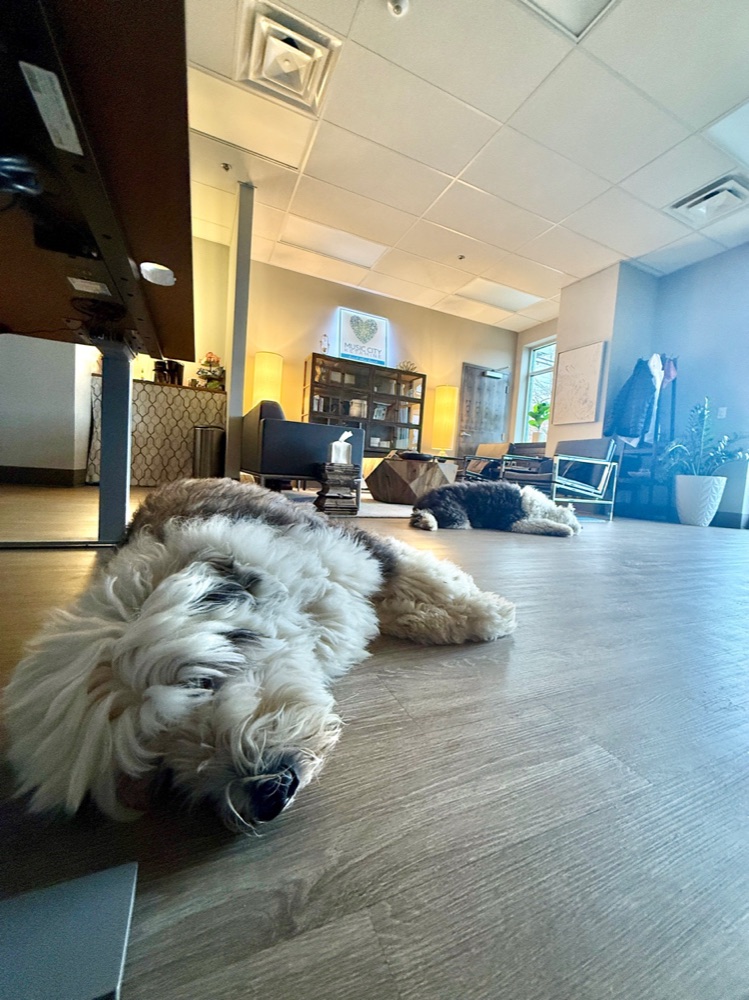
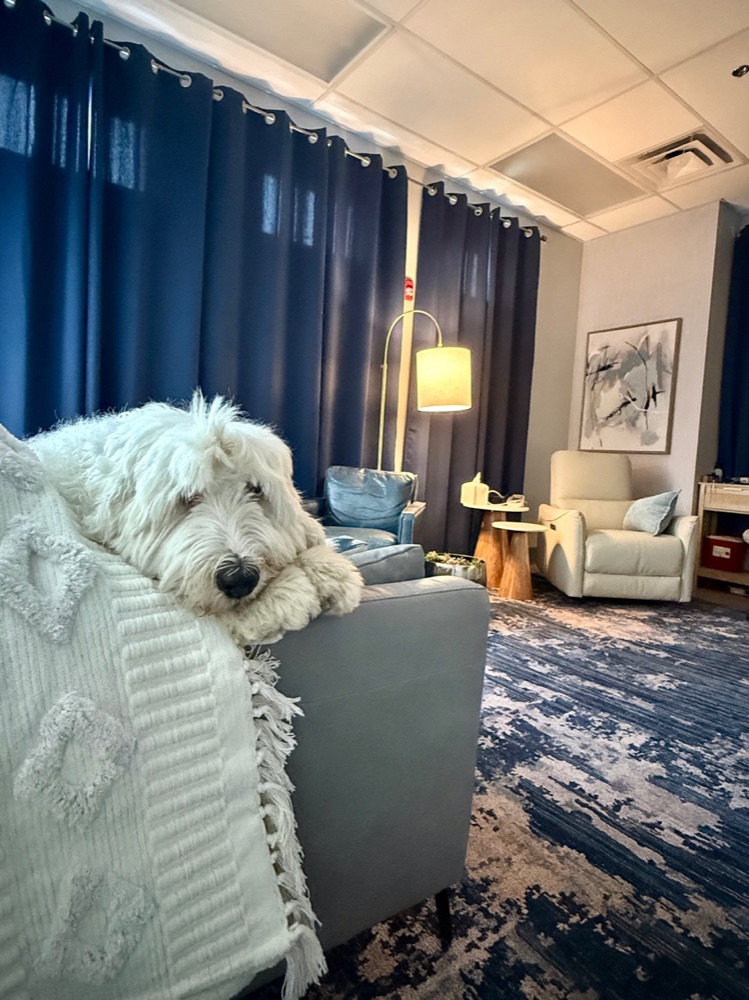
Private treatment rooms. No open bays, no waiting rooms full of strangers. Your session happens in a calm, private space with Walter White (our therapy dog and Director of Hugs) available for comfort.
No judgment. Whether you're dealing with PTSD, addiction, chronic pain, depression, or all of the above — we've heard it before, and we treat the whole person, not just the diagnosis.
Flexible scheduling. We understand that 9-to-5 appointments don't work for everyone. We accommodate schedules and can often provide same-week availability for veterans in crisis.
Your team stays in the loop. With your permission, we coordinate with your VA providers, therapists, and primary care team to ensure continuity of care.
If you or a veteran you know is in crisis, please reach out immediately. Veterans Crisis Line: dial 988, then press 1. Crisis Text Line: text 838255. These services are free, confidential, and available 24/7.
Music City Ketamine is not an emergency facility. If you are experiencing a medical or psychiatric emergency, please call 911.
A conversation costs nothing. We'll be honest about whether ketamine therapy makes sense for your specific situation — and we'll help navigate VA options if applicable.
Schedule a ConversationNot ready to schedule? Text us at (615) 988-4600.