
How Ketamine
Therapy Works
A different mechanism. A different timeline. A different kind of hope for people who've tried everything else.
A different mechanism. A different timeline. A different kind of hope for people who've tried everything else.
Every journey starts with a conversation. No commitment required at any point — you move forward only when you're ready.
A free, no-pressure phone call or text exchange. Tell us what you're going through. Ask anything. We'll be honest about whether ketamine therapy is likely to help — and if it's not, we'll tell you that too. This call typically takes 5-10 minutes.
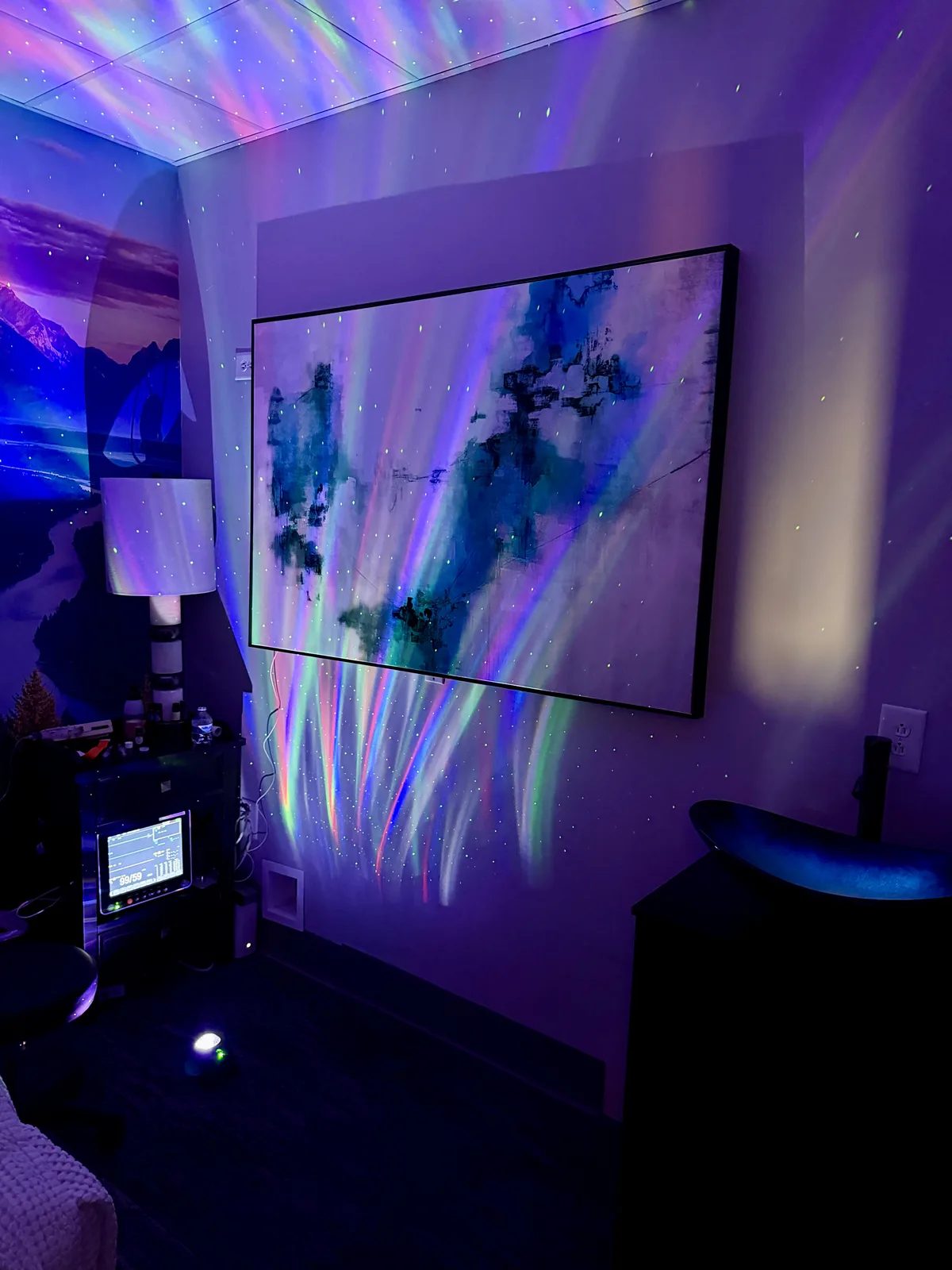
You'll settle into a comfortable recliner with a weighted blanket, noise-canceling headphones, and calming music. Marla starts the IV — a small, painless catheter — and you'll begin to feel the effects within minutes. Your vital signs are monitored continuously for 45-60 minutes.
Most patients complete six sessions over two to three weeks, then transition to maintenance infusions as needed — typically once every 4-8 weeks. Many patients notice improvement after just one or two sessions. Your protocol is tailored entirely to your response.
You arrive, settle in, and Marla walks you through everything before the IV starts. There are no surprises. You're in control of the music, the lighting, and the temperature. Walter White or Wilma might stop by to check on you.
Within a few minutes of the infusion starting, most patients describe a feeling of gentle dissociation — a sense of floating, of stepping back from the weight of their thoughts. Some see soft colors or patterns. Some feel profoundly relaxed for the first time in months. Many describe it as the first moment of quiet their mind has experienced in years.
You stay conscious throughout the session. You can speak, ask questions, or request adjustments. Marla oversees every infusion and provides anesthesia-level monitoring of your vitals throughout, adjusting the dose in real time. The infusion lasts about 45 minutes, followed by a 15-minute recovery period where you rest until you feel grounded.
You'll need someone to drive you home — the effects make it unsafe to drive for a few hours. Most patients feel noticeably different within hours of their first session. Some describe it as a lifting, a lightening, a sense that the world has color again.
Traditional antidepressants like SSRIs (Prozac, Zoloft, Lexapro) work on serotonin. They take 4-8 weeks to build up in your system, and they don't work for roughly one in three patients. If the first one fails, you try another. Then another. Months or years can pass.
Ketamine works on an entirely different system: glutamate, the brain's primary excitatory neurotransmitter. By blocking NMDA receptors, ketamine triggers a cascade of neurochemical events that rapidly increase brain-derived neurotrophic factor (BDNF) — a protein that helps your brain grow new neural connections.
Think of depression, anxiety, and PTSD as ruts worn into a dirt road. Your brain keeps traveling the same painful pathways because those are the only pathways it has. Ketamine doesn't just fill in those ruts — it helps your brain build entirely new roads. This process is called neuroplasticity, and it's why ketamine can produce lasting change rather than just temporary symptom relief.
Research suggests ketamine can support synaptic plasticity in brain regions involved in mood and stress response. That mechanism is different from traditional antidepressants, but it does not guarantee a particular clinical result.
Traditional antidepressants often take weeks to reach full effect. Some patients experience meaningful improvement after ketamine sooner, while others need more time or do not respond. Immediate safety concerns still require emergency or crisis care.
SSRIs modulate serotonin and take weeks to work. They help many people, but roughly 30% of depression patients don't respond to them. Ketamine works through glutamate and NMDA receptors — a completely different mechanism — and can provide relief within hours. For treatment-resistant patients, ketamine offers a path when SSRIs have failed.
Oral ketamine is absorbed through the digestive system, which means unpredictable bioavailability — typically only 20-30% of the dose reaches your brain. IV ketamine delivers 100% bioavailability directly to the bloodstream, allowing precise dose control and consistent results. IV also allows real-time adjustment, which oral simply cannot offer.
Spravato is an FDA-approved nasal spray containing esketamine (one half of the ketamine molecule). It must be administered in a certified healthcare setting, uses a fixed dosing schedule, and is typically only approved for treatment-resistant depression. IV ketamine allows individualized dosing, can treat a broader range of conditions, and gives your provider full control over the infusion rate and duration.
Several companies now prescribe low-dose oral ketamine via telehealth for at-home use. While convenient, these services lack medical monitoring, offer lower and less predictable doses, and cannot adjust treatment in real time. At Music City Ketamine, your vitals are continuously monitored and your CRNA adjusts your infusion in real time — the same level of care you'd receive in an operating room.



You don't have to decide today.