IV Ketamine for
PTSD
Trauma rewires the brain. Ketamine helps rewire it back. A new path forward for those living in the aftermath of the unthinkable.
Start with a simple conversation. No pressure — just clarity.Trauma rewires the brain. Ketamine helps rewire it back. A new path forward for those living in the aftermath of the unthinkable.
Start with a simple conversation. No pressure — just clarity.Post-traumatic stress disorder is not a sign of weakness. It is the brain's survival system stuck in overdrive — a fire alarm that keeps ringing long after the fire is out. Combat, assault, accidents, abuse, loss — the specific trauma varies, but the pattern is the same: your brain encoded the experience so deeply that it cannot stop reliving it.
The hypervigilance that once kept you alive now keeps you exhausted. The emotional numbness that once protected you now isolates you from the people you love. And the flashbacks pull you back into the worst moments of your life without warning or mercy.
Traditional PTSD treatments — therapy, SSRIs, exposure protocols — help many people. But for those who have tried these approaches and still find themselves caught in the trauma loop, ketamine offers something genuinely different: the possibility of processing what happened without being overwhelmed by it.
When you recall a memory, it enters a vulnerable state where it can be modified before being stored again — a process neuroscientists call reconsolidation. In PTSD, traumatic memories are stored with their original emotional intensity, as if they are happening right now rather than in the past.
Ketamine appears to facilitate a healthier reconsolidation process. By modulating glutamate signaling during the window when traumatic memories are recalled, ketamine may allow the brain to re-store these memories with less emotional charge. The memory itself doesn't disappear — what happened still happened — but the visceral, overwhelming quality of the memory can diminish significantly.
In PTSD, the amygdala — the brain's threat detection center — is hyperactive, triggering fight-or-flight responses to stimuli that are not actually dangerous. Meanwhile, the prefrontal cortex, which should regulate these fear responses, is underactive. Ketamine helps restore the balance between these regions, turning down the amygdala's false alarms while strengthening prefrontal control.
Chronic PTSD is associated with reduced synaptic density in key brain regions. Ketamine stimulates the rapid growth of new synaptic connections — literally building new neural pathways that support healthier patterns of thought and emotional regulation. This neuroplasticity effect is one reason many patients describe feeling like themselves again after ketamine treatment, sometimes for the first time in years.
Many patients describe a window after treatment where the brain feels more open to change.
We understand that trust does not come easily when you have PTSD. That is why everything about your experience here — from the first phone call to the last infusion — is designed around safety, predictability, and your sense of control.
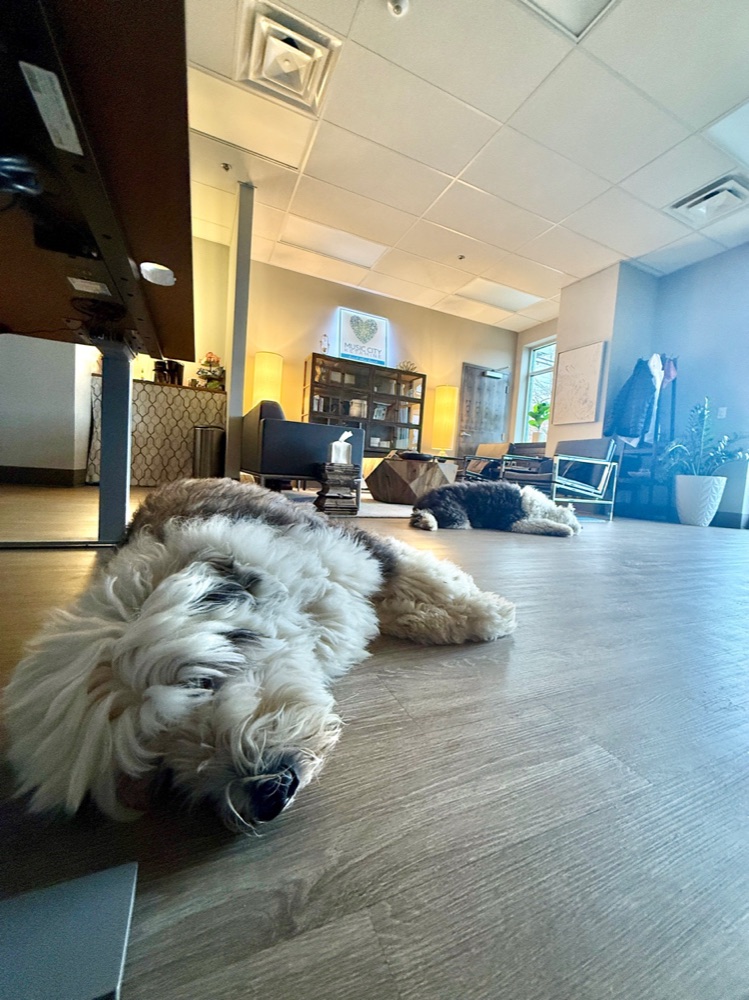
You will always know what is coming next. Marla explains every step of the process before it happens. You can stop at any time, for any reason, no questions asked. The treatment suite is private, quiet, and designed to feel more like a living room than a medical facility.
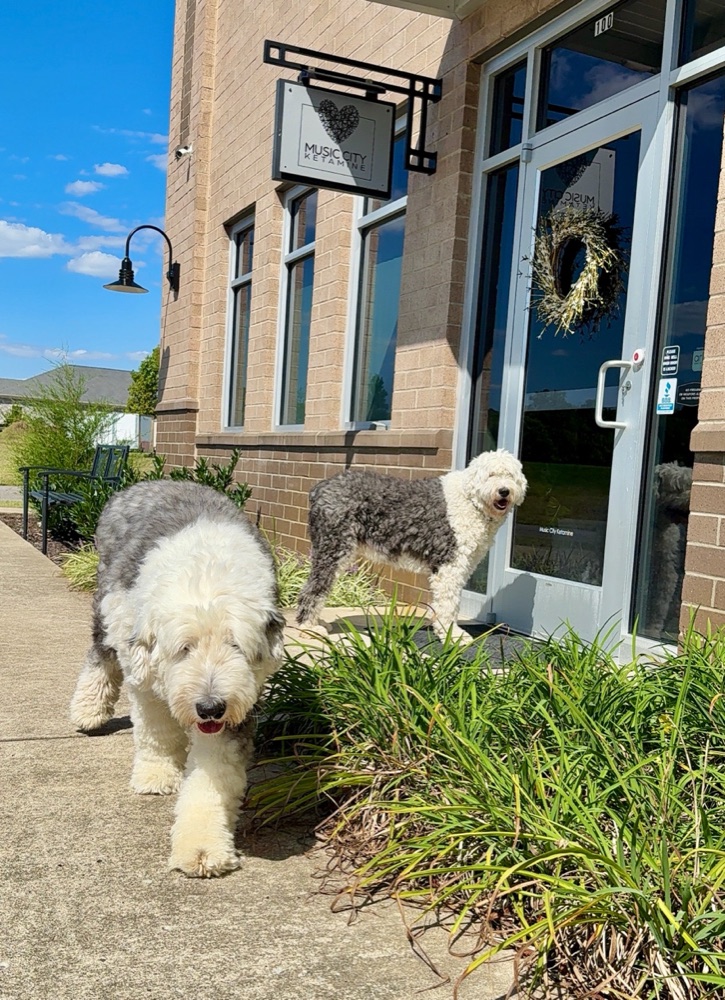
Our therapy dogs, Walter White and Wilma, are often present in the clinic. Many of our PTSD patients have told us that having a calm, gentle animal nearby makes the experience feel safer. Wilma, in particular, has an uncanny ability to sense when someone needs a little extra comfort.
Treatment typically involves a series of six infusions over two to three weeks. The infusion runs about 40 minutes, but plan on about an hour total from start to finish. You are monitored continuously with hospital-grade equipment while Marla oversees your infusion. Many patients choose to coordinate their ketamine infusions with ongoing talk therapy to maximize the neuroplastic window that ketamine creates.
You never have to tell us what happened. See how our Trauma & Grief program works, including complex PTSD, childhood trauma, and traumatic grief, or compare every PTSD treatment available in Nashville.

After two deployments and years of struggling with PTSD, I had pretty much accepted that the hypervigilance, the nightmares, and the emotional numbness were just my life now. I had tried therapy, medication, and everything the VA offered. Some things helped on the edges, but nothing touched the core of it.
My wife found Music City Ketamine and convinced me to try one consultation. Marla listened — really listened — and never once made me feel like a case study. After my second infusion, I slept through the night for the first time in three years. By the end of the series, the flashbacks had lost their teeth. I am still the same person with the same memories, but they don't control me anymore.
A free, confidential phone consultation is all it takes. No pressure. No judgment. Just a conversation about whether ketamine therapy could help you reclaim your life.
You don't have to decide today.
Start with a simple conversation. No pressure — just clarity.Or call us directly: (615) 988-4600
Monday – Friday 8am–5pm • Weekends 9am–5pm